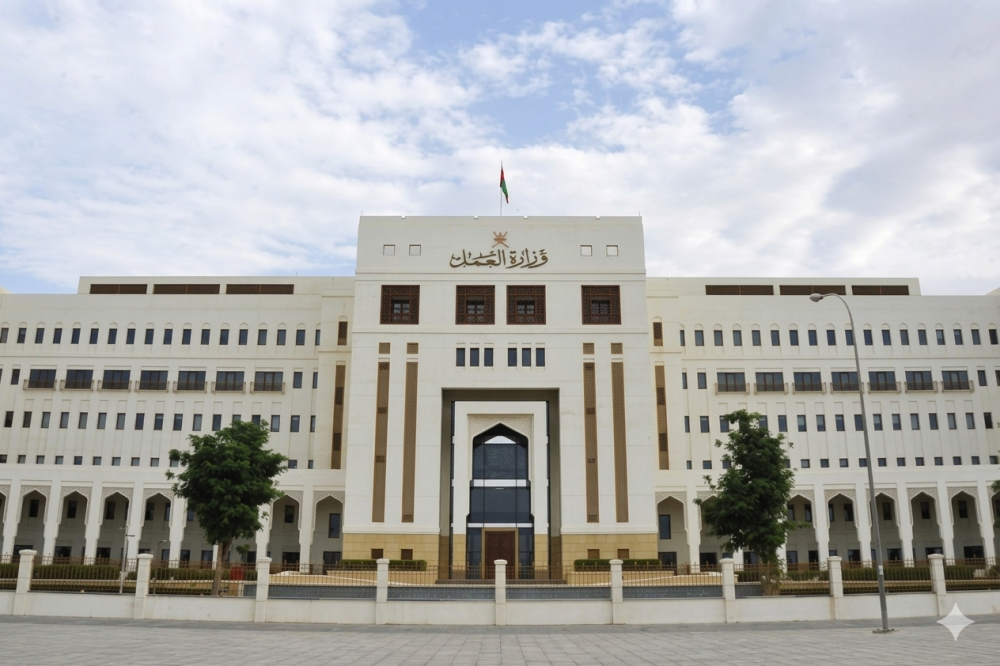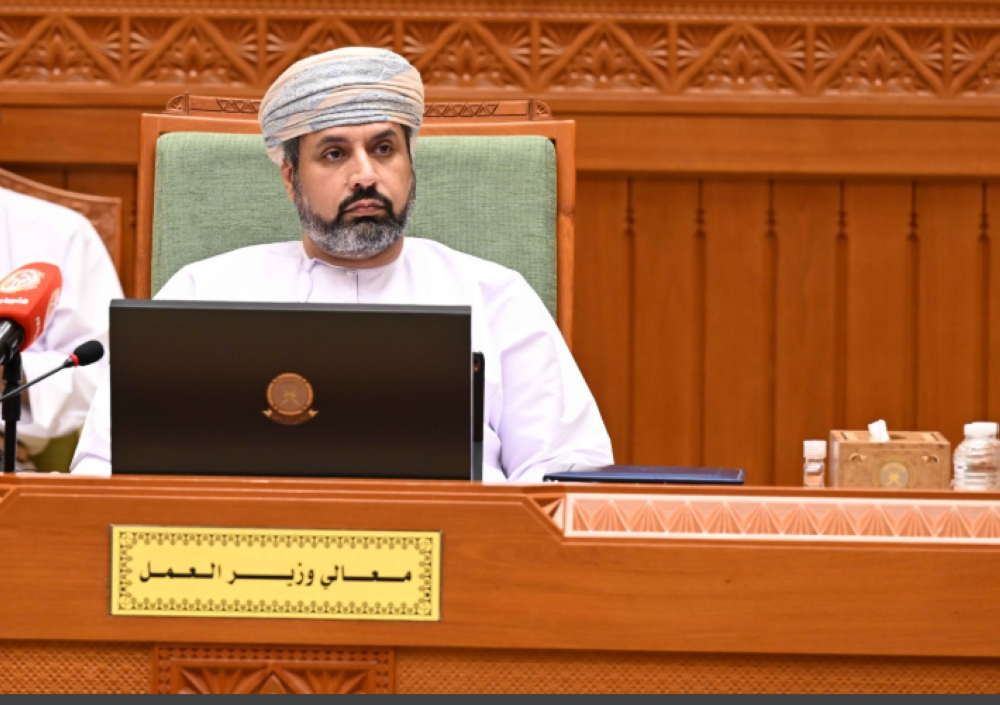





Muscat: The Ministry of Labour has announced the commencement of implementing the new promotion system for Omani civil employees in the units of the State's Administrative Apparatus, effective from the current year (2026), with an allocation of RO 10 million earmarked for this year.
This was announced during a media briefing held by the Ministry of Labour on Monday concerning the new promotion system for Omani civil employees in the units of the State's Administrative Apparatus.
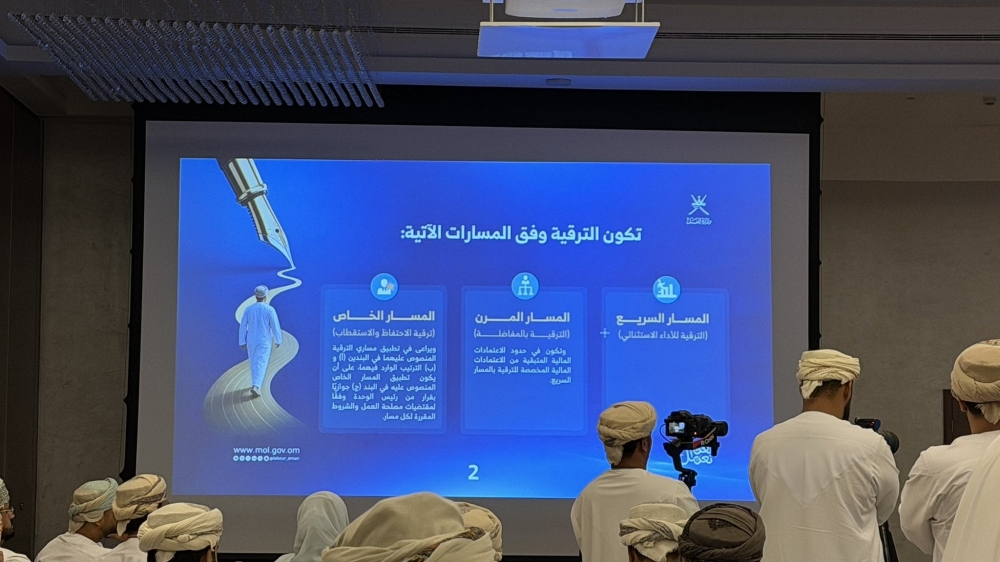
Abdullah Muhanna al Kharousi, Director General of Administrative Audit and Follow-up at the Ministry of Labour, delivered a visual presentation addressing the new promotion pathways, the conditions, criteria and controls governing them, the mechanisms for assessment and preferential selection, and the role of promotion committees in government units.
He explained that promotion will be through three pathways: The first is the fast-track pathway "Promotion for Exceptional Performance"; the second is the flexible pathway "Promotion by Preferential Selection", which is confined to the remaining financial allocations from the funds designated for fast-track promotion and the third is the special pathway "Retention and Attraction Promotion".
He further explained that in applying the two promotion pathways stipulated in items (A) and (B), the order in which they appear shall be observed, while the application of the special pathway stipulated in item (C) shall be discretionary by decision of the head of the unit, in accordance with the requirements of the work interest and the conditions prescribed for each pathway.
Regarding the conditions for promoting an employee under the fast-track pathway, he stated that these include the elapse of at least three years from the date of occupying the grade immediately preceding the grade of the post to which promotion is sought; the obtaining of three performance appraisal reports at the "Excellent" rating in accordance with the Ejada system; that the promotion shall not exceed the end of the career progression in accordance with the Job Classification and Ordering System issued by the then decision of the Chairman of the Civil Service Council No (10/2010); and the absence of any impediment to promotion.
With respect to the flexible pathway, he indicated that promotion is based on the ranking of employees according to the total scores of each, out of 100 points. The employee's job performance score is calculated at a maximum of 75 points, based on three-quarters of the average of the highest three performance appraisal reports in the grade he/she occupies, and 25 points for individual competence.
He explained that individual competence scores are calculated at a maximum of 12.5 points for assessing the employee's readiness to assume a higher post, and a maximum of 12.5 points for assessing the development of his/her skills and capabilities in the field of the post.
He added that the direct supervisor assigns the individual competence assessment for employees nominated for promotion who are under his/her direct supervision in each of the two aforementioned criteria. To ensure that all employees are not awarded equal scores in this criterion, scores are distributed in proportions of the number of employees as follows: 20 to 25 points for no more than 10 per cent of the number of employees nominated for promotion under his/her supervision; 15 to 19 points for no more than 35 per cent; 10 to 14 points for no more than 50 per cent; and 1 to 9 points for 5 per cent of the number of employees nominated for promotion under his/her supervision. This assessment is then submitted to the higher supervisor for approval.
He noted that in the event of a tie in the number of candidates for promotion under this pathway, precedence shall be given to the one with the higher total in the last two performance appraisal reports; in the event of a tie, precedence shall be given to the one with the highest score in the most recent performance appraisal report; in the event of a tie, precedence shall be given to the one with the earliest date of occupying the financial grade from which promotion is made; in the event of a tie, precedence shall be given to the one with the earliest date of appointment; and in the event of a tie, precedence shall be given to the elder in age.
He explained that the conditions for promotion under the flexible pathway include the availability of financial allocations designated for promotion in the unit's budget; the elapse of at least three years from the date of occupying the grade immediately preceding the grade of the post to which promotion is sought; the employee's obtaining of three performance appraisal reports of no less than a "Good" rating in accordance with the Ejada system. The employee's exceeding the end of career progression in accordance with the Job Classification and Ordering System issued by the decision of the (then) Civil Service Council No (10/2010) shall not prevent his/her promotion; and the absence of any impediment to promotion.
Regarding the special pathway "Retention and Attraction", he explained that promotion is effected by decision of the head of the unit in accordance with conditions including that the proportion of promotions under this pathway shall not exceed one per cent of the budget allocated for the promotion-by-preferential-selection pathway, and that the employee to be promoted must occupy a post having a fundamental impact on the core competences of the unit and requiring rare competence or precise specialised skill that is difficult to fill or whose occupant is difficult to replace.
It is also required that at least three years have elapsed from the date of occupying the grade immediately preceding the grade of the post to which promotion is sought. The employee's exceeding the end of career progression in accordance with the Job Classification and Ordering System issued by the decision of the then Chairman of the Civil Service Council No (10/2010) shall not prevent his/her promotion; and the absence of any impediment to promotion.
The Ministry of Labour explained that a promotion committee shall be established in each unit by decision of its head, composed of an odd number of no fewer than three members, with the post of its chairman being no lower than the level of Director General. The decision shall designate the secretary of the committee, who shall not have a counted vote.
The committee is competent to receive promotion applications from the competent division and to verify that candidates meet the conditions, criteria and controls of promotion. It is also competent to discuss with the higher supervisor or direct supervisor, as the case may be, the reasons and bases for nominating an employee for promotion if the nomination request does not contain sufficient documents supporting the nomination, and to submit a recommendation concerning employees eligible for promotion to the head of the unit within the limits of the designated financial allocations.
The Ministry explained that the division competent for human resources shall prepare, based on the unit's job budget records, an annual statement to be submitted before the end of January each year containing the names of nominated employees who meet the promotion conditions.
With regard to impediments to promotion, the Ministry of Labour explained that an employee may not be promoted during any period of imprisonment, nor may an employee suspended from work or referred for administrative or criminal accountability be promoted during the period of suspension or referral, provided that the post grade is reserved for him/her.
It added that if he/she is not convicted or is penalized with a warning or a deduction from salary for a period not exceeding five days, his/her promotion must be restored to the date on which it would have been effected had he/she not been referred for administrative accountability or to the competent courts. An employee may also not be promoted if his/her most recent performance appraisal report is at the "Weak" rating.
An employee may likewise not be promoted if any of the penalties specified are imposed on him/her, except after the expiry of the period indicated against each, namely six months in the case of deduction from salary for more than five days up to fifteen days, and nine months in the case of deduction from salary for more than fifteen days or reduction of salary by a proportion not exceeding 10 per cent of the salary.
The Ministry explained that promotion decisions are issued by the head of the unit twice each year and take effect on the second of January and July. If a promotion decision includes more than one employee and the promotion is on the same date, the order of seniority of employees shall be according to their seniority in the grade from which promotion is made.
Regarding the methodology for distributing the financial allocation for promotions, the Ministry explained that RO 10 million has been earmarked for distribution among the entities covered according to a mechanism based on proportionality according to the number of those eligible for promotion in each entity, such that the total number of eligible persons equals the sum of the number of eligible persons in all entities, and the financial allocation for the entity equals (the number of eligible persons in the entity ÷ the total number of eligible persons) × RO 10 million.
The Ministry of Labour affirmed that the methodology for distributing the financial allocation for promotions embodies fairness of distribution, such that each entity's share is directly linked to the number of its eligible persons; clarity of calculation through a unified equation that can be applied and verified; accommodation of differences in the sizes of entities, as entities with a larger number of eligible persons receive a larger share in proportion; and full distribution of the amount, as the entire sum of RO 10 million is distributed among the entities covered.
Abdullah Muhanna al Kharousi, Director General of Administrative Audit and Follow-up at the Ministry of Labour, stated that the annual amount allocated for promotions is not fixed and is subject to increase whenever the Government deems fit.
He added that employees occupying temporary posts are not covered by the promotion system, given that such posts do not have job grades listed within the schedule of grades of the posts offered.
For his part, Mohammed Mubarak al Kalbani, Director General of Development and Quality Assurance at the Ministry of Labour, indicated that there is an electronic system linked to the "Ejada" system that will assist members of the promotion committee in fulfilling the requirements pertaining to promotion.
He noted that there will be continuous communication between the Ministry of Labour and the committees in government units through reports to verify the soundness of implementation, or through the competent divisions at the Ministry of Labour.
The media briefing was attended by Said Abdullah al Balushi, Undersecretary of the Ministry of Labour for Human Resources Development, along with a number of officials and specialists at the Ministry and representatives of the units of the State's Administrative Apparatus.
Oman Observer is now on the WhatsApp channel. Click here